🎉 Calla - Delivery & Pickup Date is available now on Shopify app store

Shopify app store


Franchise restaurant social media works best when the content feels close to the customer’s real life. A generic brand post may look polished, but it often fails to answer the local guest’s real question: “Why should I visit this location today?”
That is why the best-performing localized content is usually not the most expensive content. It is the most relevant content. It shows the neighborhood, the team, the food, the event, the customer proof, and the reason to act now.
For franchise and chain restaurants, the strongest content types are:
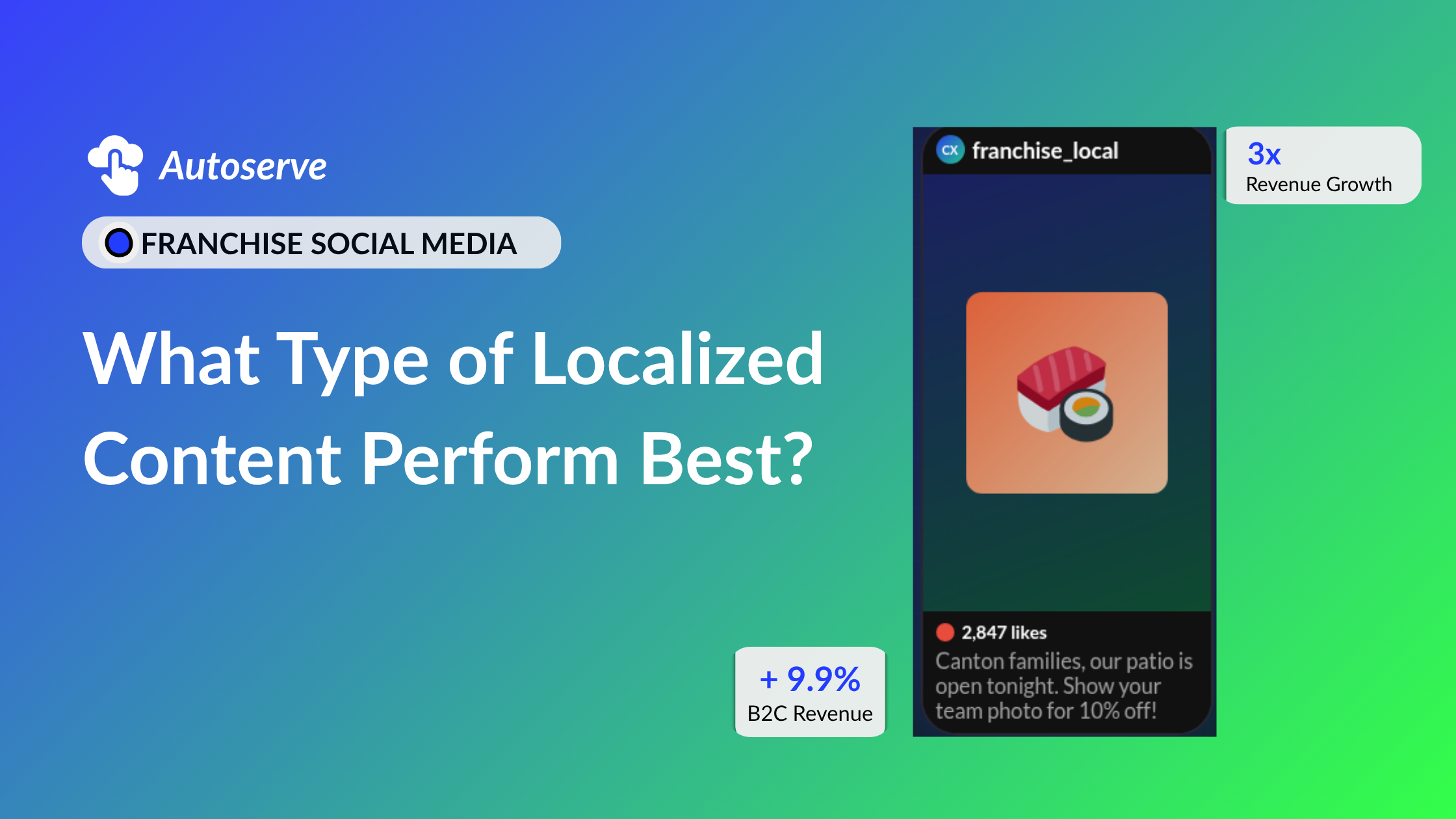
Franchise that execute localized social media marketing grow revenue up to 3x faster than those replying on national content alone.
Hyper-local content is social media content made for one specific restaurant location, neighborhood, or local audience. It uses local signals such as nearby schools, events, sports teams, street names, regular customers, staff members, and community moments.
A generic brand post says, “Try our new menu item.”
A hyper-local post says, “Wayland guests, our new spicy tuna roll is available tonight before the high school game.”
That second post performs better because it feels timely, personal, and useful. It answers a real local need. It also creates a stronger emotional trigger: this is happening near me, for people like me, right now.
For franchise restaurants, hyper-local content also solves the brand consistency problem. Corporate keeps the brand voice, visual standards, offers, and compliance rules. Each location adds local context. The result is controlled localization, not random posting.
The best hyper-local content should include five elements:
Example:
“Canton families, we’re open after tonight’s youth soccer finals. Show your team photo for 10% off dine-in orders before 8 PM.”
That post is stronger than a generic food image because it connects community, timing, scarcity, and action.
Community-based content performs well because restaurants are social places. People do not only choose food. They choose places connected to their routines, families, schools, offices, and weekend plans.
A franchise location can create local content around:
The key is to avoid vague captions like “We love our community.” That sounds nice, but it does not create action. Use specific details instead.
Better examples include:
Deloitte Digital found that 65% of consumers follow food and lifestyle topics on social media, and restaurants reported an average 9.9% B2C revenue increase from social media strategies in 2024. That supports the idea that restaurant social content can influence real dining behavior when it is useful.
For franchise brands, this content should follow a monthly local moments calendar. Corporate can provide templates. Local managers can supply event names, dates, photos, and community partners.
Meta Ads are powerful for franchise restaurants because they combine visual content, local targeting, retargeting, and fast testing. Restaurants sell with appetite, emotion, and timing. Facebook and Instagram ads let brands show food, staff, events, offers, and guest experiences to people near each location.
Meta reported 3.56 billion daily active people across its family of apps in March 2026. It also reported that ad impressions increased 19% year over year, while average price per ad increased 12% year over year. This shows both massive reach and rising competition, which makes smarter local targeting more important. Meta Ads can deliver strong ROI because campaigns can be built around local intent. A franchise brand can run different ads for different stores without losing brand control.
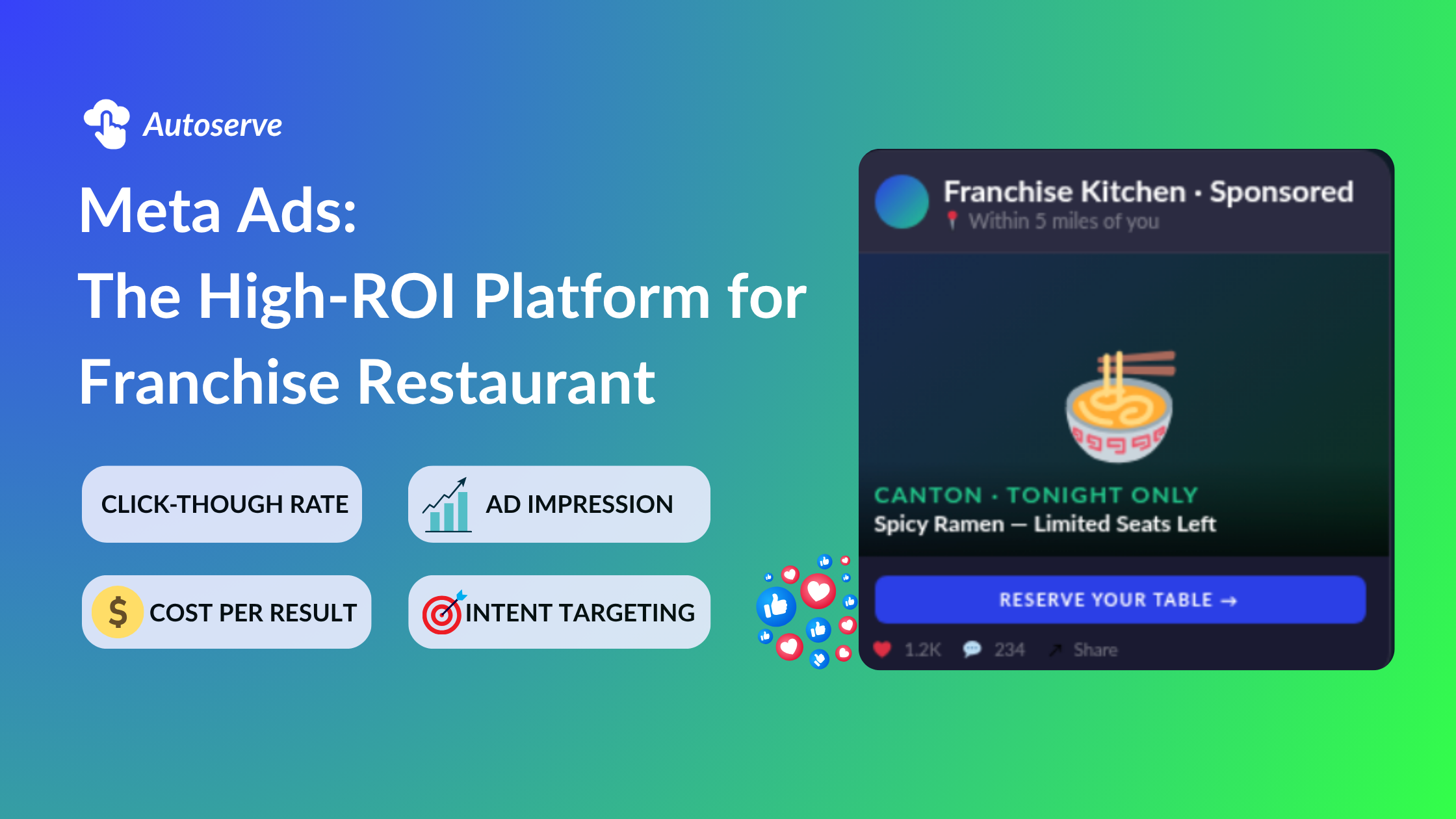
The mistake is using Meta Ads only to “boost posts.” A boosted post may create reach, but it often lacks a clear conversion path. Better campaigns use location targeting, offer timing, UTM links, landing pages, and store-level reporting.
A high-ROI Meta campaign should answer:
For franchise restaurants, Meta Ads work best when paired with hyper-local creative. The platform gives targeting power. The local content gives the guest a reason to act.
Instagram should make each restaurant location feel alive. It should not look like a static menu board. Guests want to see the food, atmosphere, staff, service moments, and local experience before they decide to visit.
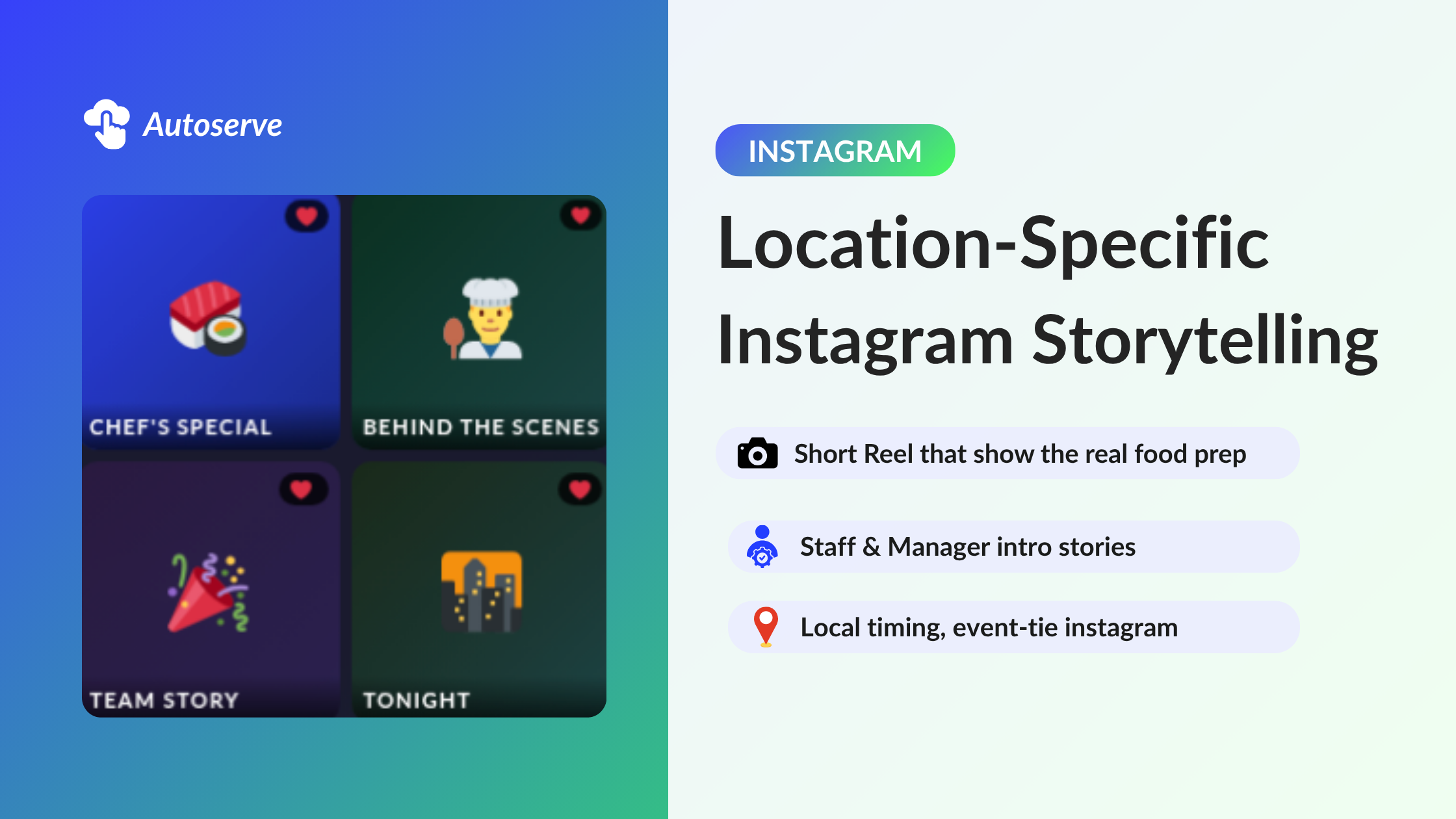
Location-specific storytelling means each post should show something true about that restaurant. A sushi franchise can show the chef preparing fresh rolls. A burger chain can show the lunch rush near a business district. A family restaurant can show weekend groups, birthday tables.
Strong Instagram content for franchise restaurants usually includes:
The caption should be simple and local. Avoid generic lines like “Fresh food made daily.” Use context instead.
Example:
“Medfield, our patio is open tonight. Come in before 7 PM and try the new roll while it is still available.”
That caption gives the user location, timing, product, and urgency.
Instagram also supports discovery before search. A customer may see a Reel first, then check reviews, open Google Maps, visit the menu, or make a reservation. That makes Instagram a top-of-funnel and mid-funnel channel for local restaurants.
The best franchise systems do not ask every location to invent content from scratch. Corporate should provide approved templates, music rules, caption examples, offer rules, and posting themes. Local teams should provide the real stories.
UGC, or user-generated content, is content created by customers. It includes tagged photos, short videos, reviews, comments, testimonials, and customer stories. For franchise restaurants, UGC is one of the strongest forms of local social proof.
A brand photo says, “We think our restaurant is good.”
A customer photo says, “People near you are already eating here.”
That difference matters. BrightLocal’s 2026 Local Consumer Review Survey found that review recency, star ratings, and business responses strongly shape local trust. It also found that consumers are looking beyond text reviews, including AI-generated review summaries and other trust signals.
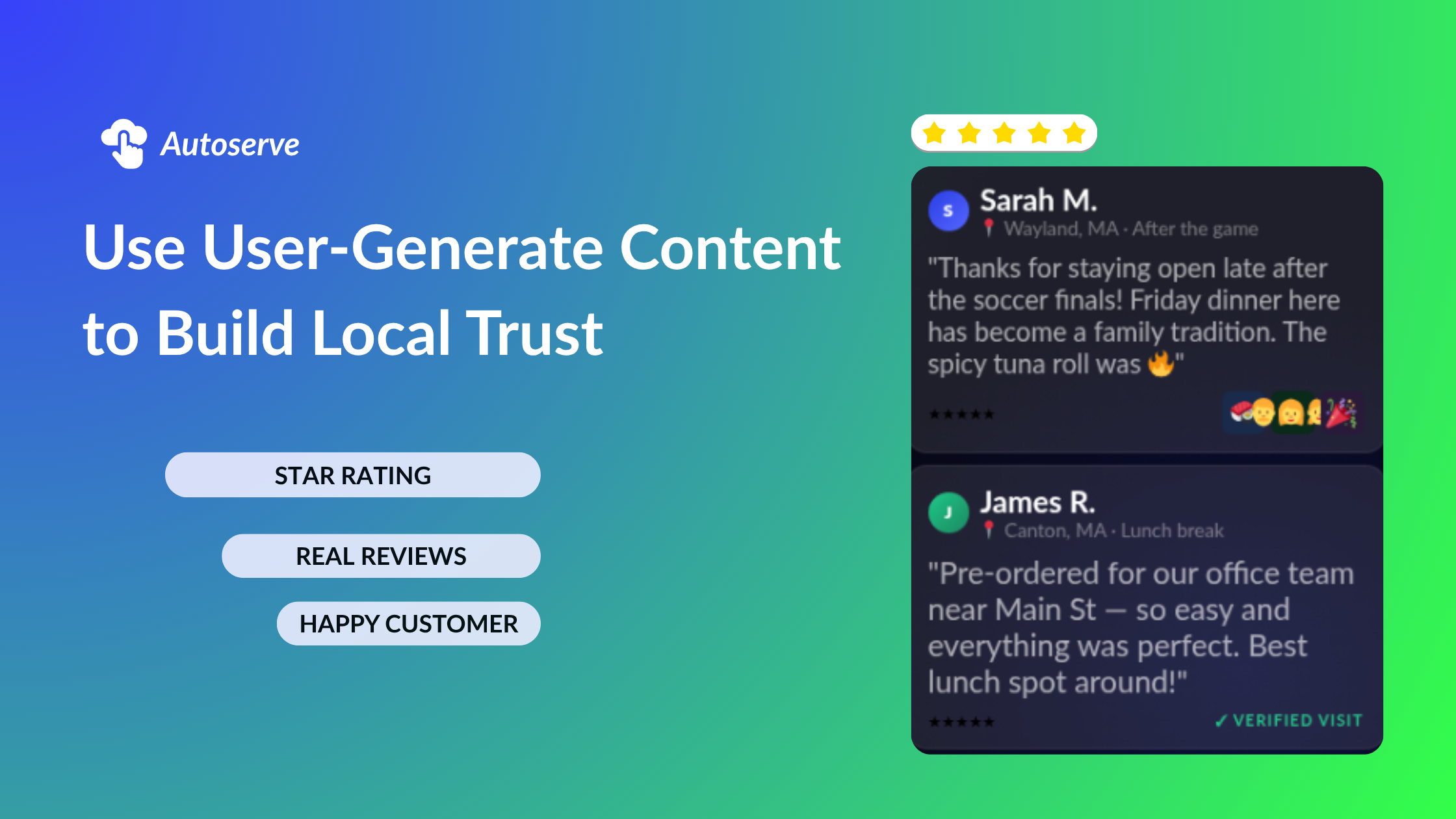
UGC works best when it feels real. Do not over-edit customer photos until they look like ads. The value is authenticity. Local audiences want to see real tables, real food, real lighting, real portions, and real people.
A strong UGC caption might be:
“Thanks for visiting us after the Wayland game, Sarah. We love seeing local families make Friday dinner part of the tradition.”
That post builds community, gratitude, and social proof in one simple message.
1. How Can User-Generated Content, Reviews, and Customer Photos Strengthen Local Trust?
UGC, reviews, and customer photos show real guests enjoying the local restaurant. They make the location feel more credible, reduce doubt, and help nearby customers feel confident enough to visit, order, or book.
2. How Should Each Restaurant Location Feature Staff, Chefs, Managers, and Behind-the-Scenes Content?
Each location should share simple human moments, such as manager intros, chef picks, prep videos, and team snapshots. This makes the restaurant feel local, friendly, and trustworthy while keeping the franchise brand consistent.
The best localized content for franchise restaurant social media is not random local posting. It is a system. It combines community content, staff stories, Instagram storytelling, Meta Ads, customer reviews, UGC, and clear revenue tracking.
Generic brand posts keep the brand visible. Hyper-local content makes the location desirable.
For franchise and chain restaurants, that is the real growth opportunity. Show the guest why this location matters today. Show the people behind it. Show the community around it. Show proof from real customers. Then give the guest a reason to act now.
If you're looking to boost your local restaurant brand and improve how each franchise location performs online, Autoserve can help review your local content, Meta Ads, Instagram strategy, and customer engagement approach.
We try to make easy and simple for every professionals. Get 30 days free trial - No credit card required.

