🎉 Calla - Delivery & Pickup Date is available now on Shopify app store

Shopify app store


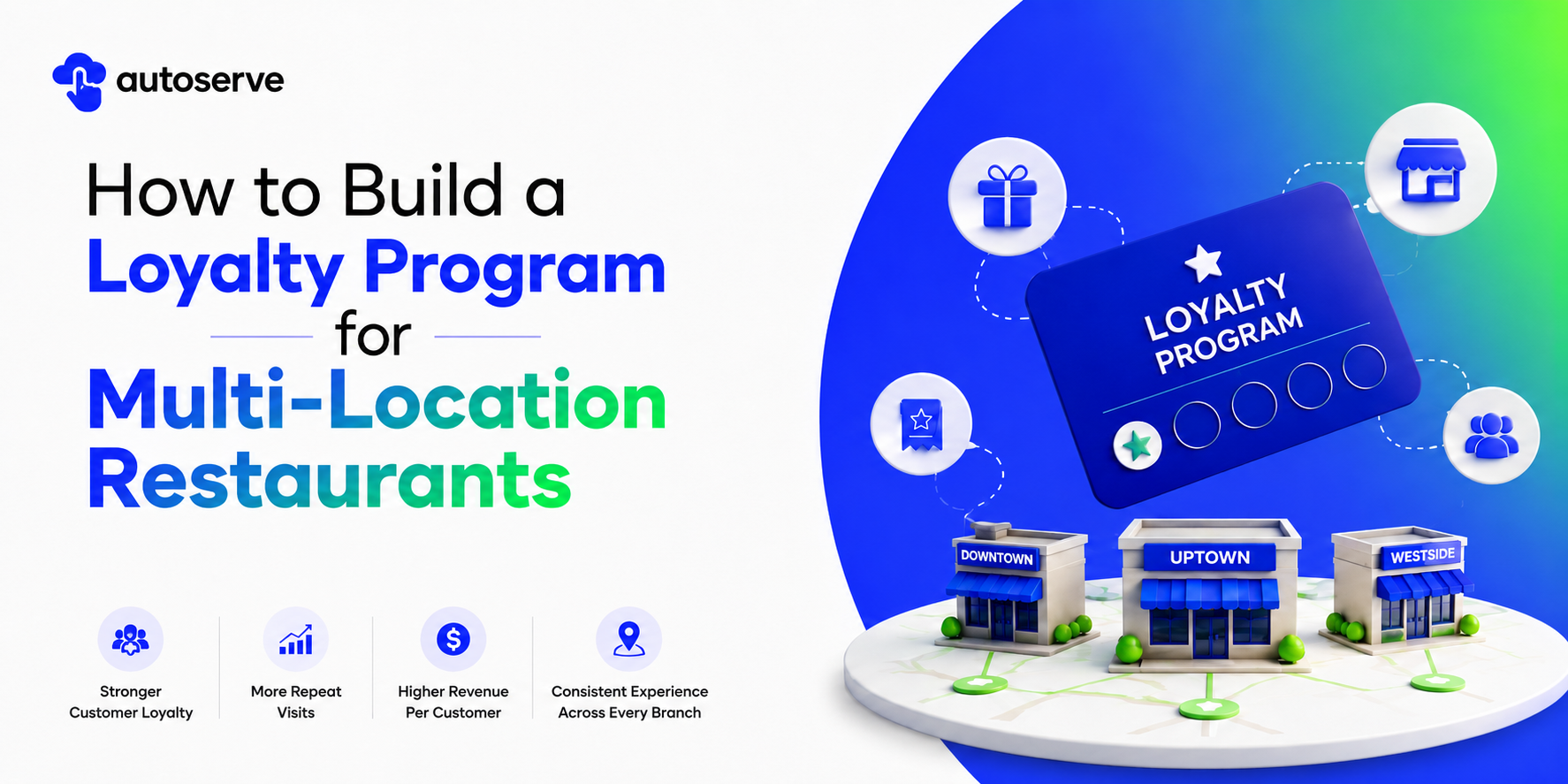
Picture this: A guest walks into your downtown location on a Tuesday, earns points on her lunch, and feels great about your brand. That Friday, she visits your uptown branch for dinner with friends. She tries to redeem her reward, but the staff has no idea her account even exists. She leaves frustrated and embarrassed in front of her group, and she never comes back.
You never find out why.
That silent walkaway is the loyalty crisis hiding in plain sight across restaurant groups everywhere. It does not show up as a complaint. It does not appear in your weekly review. It shows up as slow, invisible erosion in repeat visits and revenue, the kind that is easy to ignore until it becomes impossible to recover from.
Here is the uncomfortable truth: most multi-location restaurants are running loyalty programs designed for a single location. The rewards are inconsistent. The data lives in silos. The customer experience breaks the moment someone crosses a branch boundary.
This guide changes that. It is built for restaurant owners, franchise operators, and multi-unit F&B managers who need a loyalty program that actually scales. It helps increase repeat visits, strengthen brand consistency, and create measurable revenue growth across every location you run. Not just the flagship location. All of them.
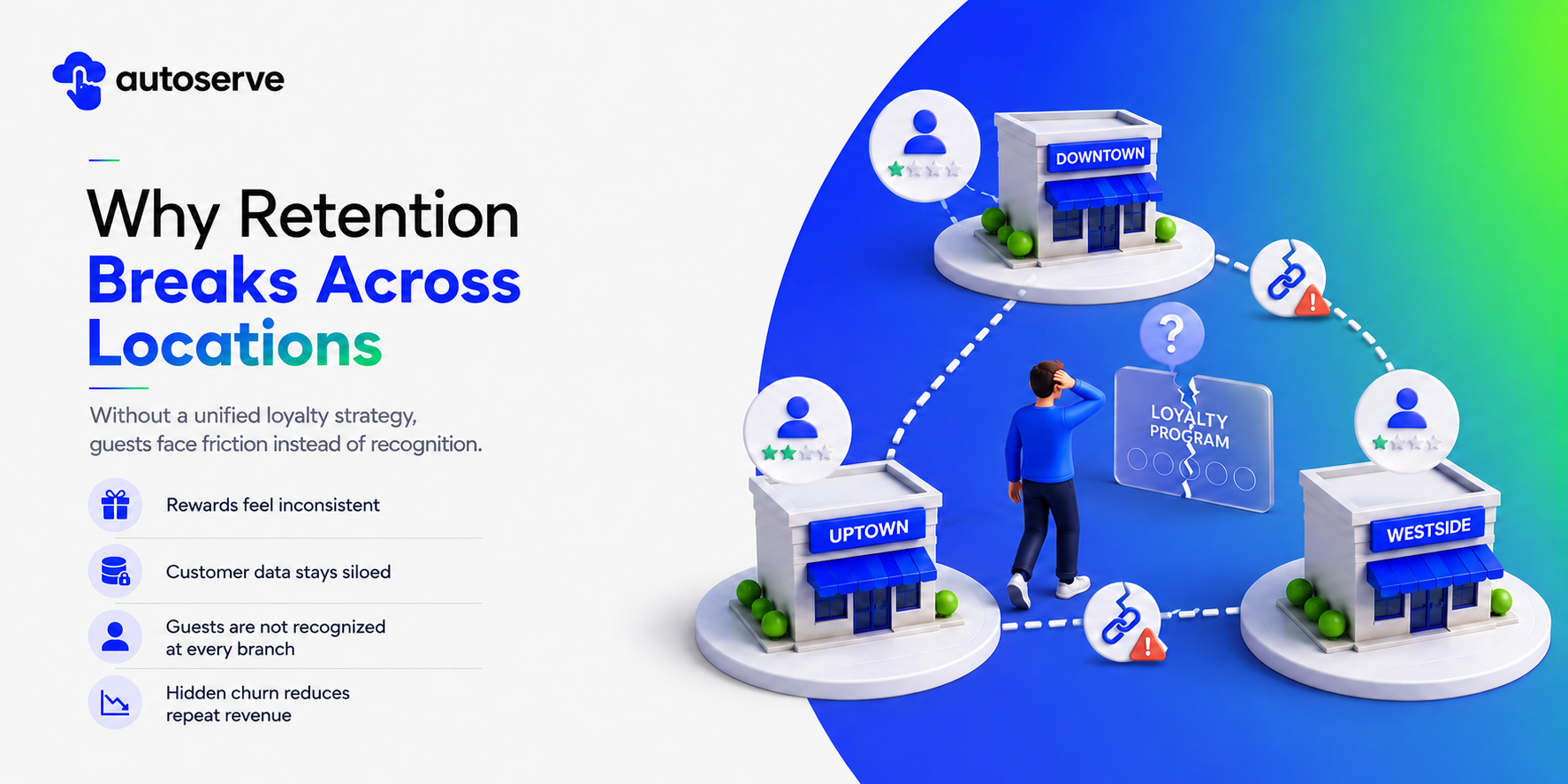
Most restaurant groups assume that great food and consistent service are enough to keep customers coming back. In a single-location world, that logic may work. In a multi-unit environment, it quietly fails. The gap between what operators believe and what guests actually experience is where retention dies.
Customer retention in a restaurant group is not just a marketing problem. It is an operational, brand, and data problem happening at the same time. Without a clear loyalty strategy designed for scale, even a growing restaurant group can watch customer lifetime value erode faster than new diners arrive.
A single-location restaurant has one team, one manager, and one guest experience to control. When something goes wrong, it can be fixed quickly. When something works, it can be repeated. The feedback loop is tight and visible.
A restaurant group operating five, ten, or twenty locations faces a very different challenge. Each branch has its own staff turnover, local customer mix, peak hours, and service culture. A loyalty program running on paper punch cards or a single-store POS cannot bridge those gaps.
According to research by Bain & Company, increasing customer retention by just 5% can grow profits by 25% to 95%. For a multi-location group, that compounding effect is enormous, but only if the retention system is designed for scale, not just for one address.
The core difference is simple: single-location retention is about relationships. Multi-location retention is about systems. Guests need to feel recognized everywhere they go, not just at their regular branch.
Brand trust is built through repetition. Customers return to restaurant groups because they expect a predictable and enjoyable experience. When that expectation breaks, the loyalty promise collapses. This can happen through different point values at different branches, rewards that do not transfer, or staff who are not trained on the program.
Inconsistency is one of the top reasons multi-location loyalty programs fail. A guest who earns points at Location A and cannot redeem them at Location B does not feel rewarded. She feels misled. That friction does not just cost one visit. It can cost the entire relationship.
Research from PwC found that 32% of customers will stop supporting a brand they love after just one bad experience. In a restaurant group, a single loyalty issue can permanently close the door on a repeat visitor.
Think of your loyalty program the same way you think about your menu. If your best-selling dish tastes different at every branch, you do not have a product problem. You have a systems problem. Loyalty is no different.
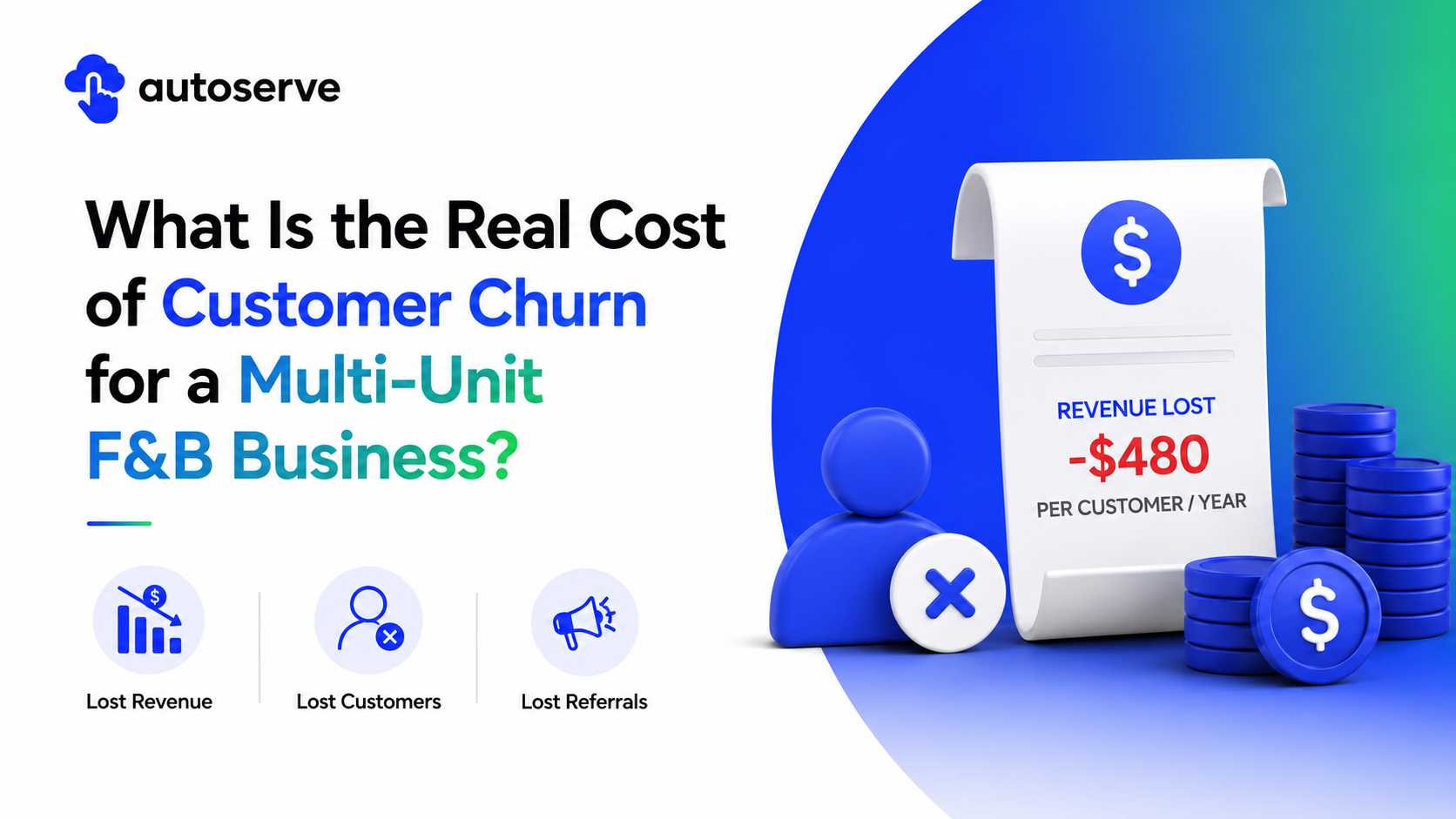
Customer acquisition costs in the restaurant industry are often much higher than retention costs. For a multi-unit group, that math becomes critical when churn happens at scale.
If your average loyalty member spends $40 per visit and visits 12 times per year, losing that guest costs $480 in annual revenue. That does not include their referral value or the cost of replacing them with paid marketing.
Multiply that across hundreds of churned guests per location, across ten locations, and the absence of a retention system becomes one of the most expensive invisible line items in your profit and loss statement.
The numbers tell only part of the story. The deeper cost of churn is the lost compounding value. Every visit, every referral, and every positive social moment disappears when a guest quietly decides not to come back.
There is no universal loyalty model that works for every restaurant group. The right structure depends on your average order value, visit frequency, customer demographics, and operational complexity. What works for a fast-casual taco chain with 50 locations may not work for a full-service seafood group with six premium branches.
The key is to choose a model that your staff can execute consistently and your customers can understand immediately. Complexity is the enemy of participation. If a guest needs to read a long terms and conditions page to understand their rewards, you have already lost them.
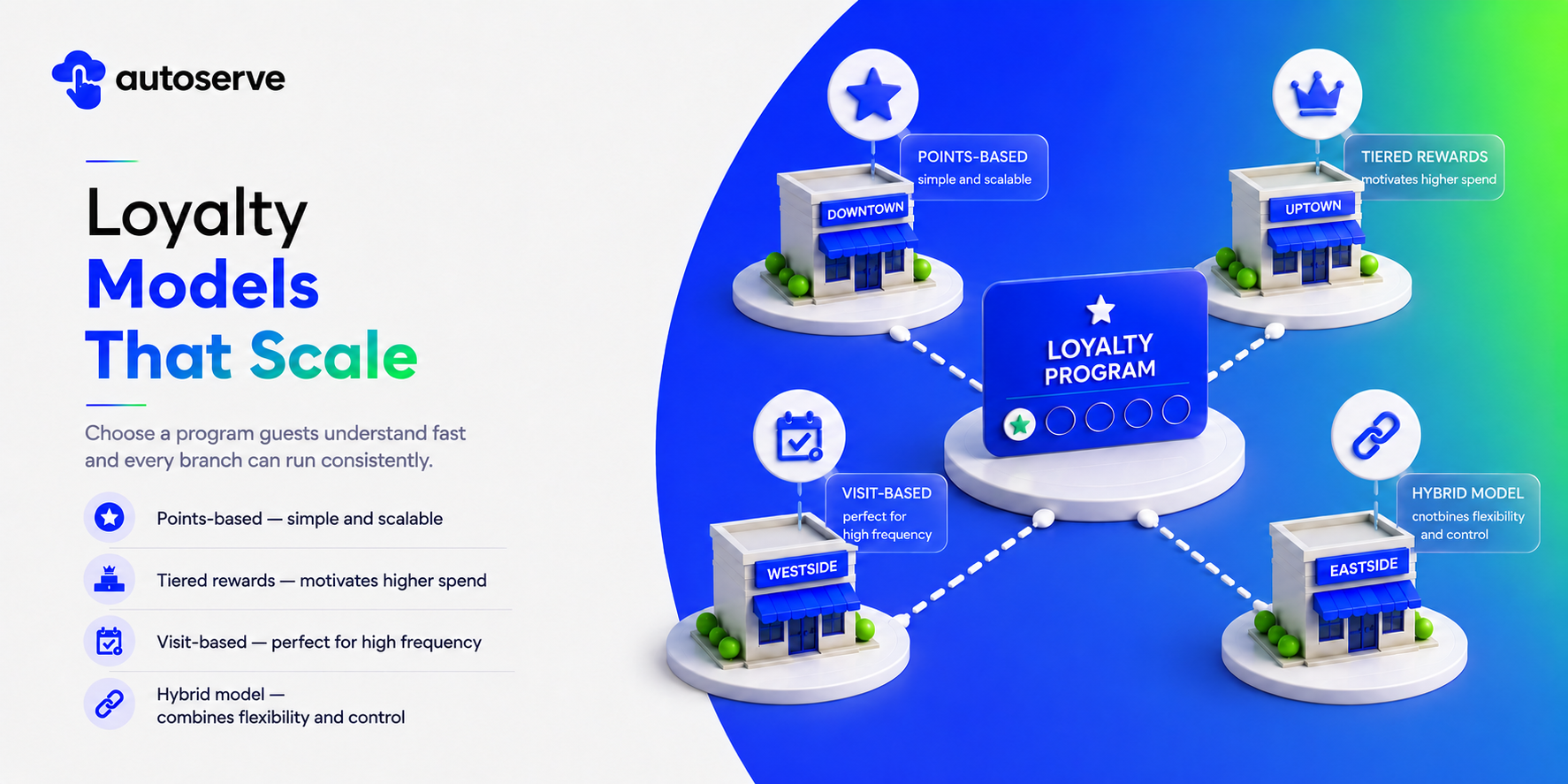
A points-based program is the most widely recognized loyalty model. Guests earn a set number of points per dollar spent, then redeem those points for rewards such as free items, discounts, or exclusive experiences.
For multi-location restaurants, the points model works well because it is transactional and scalable. Every purchase at every location feeds into one point balance. This gives guests a natural reason to visit more branches.
The critical requirement is a centralized database that syncs in real time across all locations. Without that, the model breaks quickly.
Points programs perform best for restaurant groups with moderate to high visit frequency, such as fast-casual restaurants, coffee shops, or bakery concepts where guests may visit multiple times per week. For lower-frequency, high-ticket dining experiences, other models may deliver stronger results.
Tiered loyalty programs add status to the standard points model. Guests move through levels such as Bronze, Silver, and Gold based on cumulative spending or visit count. As they move up, they unlock better rewards.
The psychology behind tiers is powerful. Status is a strong human motivator. When a guest reaches Gold status at your restaurant group, they have a strong reason to keep spending enough to stay there.
Tiered programs are especially effective for full-service restaurant groups, where average transaction values are higher and guests are more willing to focus their dining spend on one brand to maximize status.
They also create natural segmentation for targeted marketing. Your Gold tier members are your highest-value guests, so they should receive more personalized communication and stronger benefits.
Visit-based programs reward guests based on how often they come in, not how much they spend. A common structure is simple: visit 9 times and get your 10th meal free. This is the digital version of the paper punch card.
The strength of this model is simplicity. Guests understand the value immediately. There is no mental math, no confusing conversion rate, and no frustration when a small purchase earns only a few points.
Visit-based programs work best for high-frequency concepts such as quick-service restaurants, cafes, smoothie bars, and fast-casual chains. They are less effective for fine dining or occasion-based restaurant groups where guests visit only a few times per year.
Hybrid loyalty models combine the best parts of points, tiers, and visit-based programs into one flexible system. This structure works well for multi-unit restaurant brands because different customers are motivated by different things.
A typical hybrid model might work like this: guests earn points per dollar spent, move through status tiers based on annual spending, and unlock visit-based bonuses when they check in a certain number of times in a month.
Each part of the model serves a different purpose. Points reward transactions. Tiers create aspiration. Visit tracking encourages repeat behavior.
For franchise operators, hybrid models offer one major advantage: the core program stays centralized and consistent, while local franchisees can activate approved promotions to drive traffic during slower periods. This gives local owners flexibility without breaking the guest experience across the broader brand.
Consistency is not just nice to have in multi-location loyalty. It is the foundation the entire program depends on. The moment a guest experiences a different rule, a different redemption process, or a different reward value at two locations, the program stops feeling like a benefit and starts feeling like a problem.
Building consistency across branches requires decisions at three levels: technology, operations, and communication. No single fix can solve all three.
A unified loyalty experience means a guest can walk into any location, identify themselves through an app, phone number, loyalty card, or email, and instantly access the same point balance, reward status, and redemption options.
This requires a centralized loyalty platform that integrates with the POS system at every branch. Guest data must sync in real time. Cloud-based loyalty tools have made this easier for mid-sized restaurant groups, but the technology only works if the operations behind it are disciplined.
The gold standard is invisible consistency. Guests should never have to wonder whether their rewards work at a specific location. It should simply work, the same way your core menu should work at every branch.
The most common source of loyalty confusion is local promotions that override the core program rules without clear communication.
A franchisee may run a double-points Tuesday that is not reflected in the app. A location may offer a birthday reward that headquarters has not updated in the system. A new branch may launch with a different points multiplier to attract early customers.
Each decision may make sense on its own. Together, they weaken the guest’s trust in the program.
The fix is a clear rule hierarchy. Your core loyalty rules should stay the same across every location. Local promotions should sit on top of the core program and must be clearly communicated through the loyalty app, email, SMS, website, or point of sale.
Guests need to know the difference between their standard benefit and a temporary local bonus.
Centralized loyalty management means the core rules, reward values, point conversion rates, and redemption policies are controlled at the brand level. They should not be left to individual location managers to interpret or modify.
In practice, this means your loyalty program settings live in one system that all locations use. Individual managers can run the program, but they cannot change the rules, create unauthorized tiers, or override redemption policies.
This level of control is not about limiting franchise owner autonomy. It is about protecting the guest experience. Guests trust the brand, not just one location. Consistency is what makes that trust real.
Franchisees have valid reasons to want local loyalty flexibility. A downtown location with heavy lunch traffic may want to run a midweek bonus. A suburban location with strong weekend family dining may want to reward large-group visits.
The answer is a structured flexibility model.
Headquarters should define the core experience that never changes. Inside that framework, franchisees can activate approved local promotions, such as limited-time bonus points, visit-streak challenges, or local referral rewards.
This gives franchise owners local control while keeping the broader customer experience consistent.
Think of it like a national restaurant brand managing regional menu items. The core menu stays the same. Local specials are approved, time-limited, and clearly communicated as a bonus.
A loyalty program that does not generate useful guest data is just a discount machine with extra steps. The data collected through enrollment and transactions is one of the most valuable assets a restaurant group can own.
But that data must be collected with purpose, stored centrally, and used consistently.
The mistake many restaurant groups make is collecting everything and using nothing. They have transaction data, customer profiles, online orders, app activity, and campaign results, but no clear system to turn that information into better decisions.
Each data source in your restaurant technology stack tells part of the guest story.
POS data shows what each guest orders, when they visit, how much they spend, and how they pay.
CRM data shows who the guest is, including their name, contact details, birthday, preferences, and communication history.
Online ordering data shows whether a guest prefers delivery, pickup, or dine-in. It also shows what channels they use and whether they order ahead.
Mobile app data shows how guests engage with your brand outside the restaurant. It can show which promotions they open, what rewards they browse, and how often they check their balance.
When these data streams connect through one loyalty platform, you can build a complete guest profile. That profile makes every message more relevant, every promotion more targeted, and every campaign more efficient.
Not all loyal guests are the same. A guest who visits twice a week and spends $12 each time has a different value profile than a guest who visits once a month and spends $80.
Both may be loyal, but they need different incentives.
Here are five customer segments every multi-location restaurant group should track:
High-value guest identification starts with RFM analysis. RFM stands for recency, frequency, and monetary value.
Recency tells you when a guest last visited. Frequency tells you how often they visit. Monetary value tells you how much they spend.
Guests who score high in all three areas are your Champions. Guests who spend a lot but have not visited recently are strong win-back opportunities.
Location-specific behavior also matters. A branch with strong weekday lunch loyalty but weak weekend dinner retention has a different challenge from a branch with the opposite pattern.
Centralized data helps you see these patterns clearly. Without it, location-level loyalty problems stay hidden.
Loyalty data turns generic marketing into precise communication.
Instead of sending a Tuesday discount to your entire database, you can send it only to guests who have not visited on a Tuesday in the last 30 days.
Instead of sending a generic birthday reward, you can include a reminder of the guest’s favorite order.
For local advertising, loyalty data helps you build better audiences on Meta and Google. You can create lookalike audiences based on your highest-value guests, which can improve acquisition quality and reduce wasted ad spend.
Email and SMS campaigns also perform better when they are based on loyalty triggers. These triggers may include a guest reaching a new tier, getting close to a reward, or becoming inactive.
The message arrives at the right moment, for the right person, with the right offer.
Slow periods are one of the best opportunities for a loyalty program.
Many restaurant groups use public discounts to fill quiet times. The problem is that public discounts can train guests to wait for deals. A loyalty program gives you a better option. You can offer slow-period rewards only to members, which creates exclusivity and protects margin during busy shifts.
Effective time-sensitive loyalty mechanics include:
The key is positioning. “You have unlocked double points every Wednesday this month” feels like a privilege. “50% off on Wednesdays” feels like a public discount.
The economic goal may be similar, but the brand message is very different.
The best loyalty programs are not built around points alone. They are built around how guests feel when they interact with your brand.
A polished static brochure shows customers what you offer. A genuine behind-the-scenes experience shows them why they should trust you. Restaurant loyalty works the same way.
Your points program is the brochure. The way you make guests feel recognized, valued, and remembered is the real relationship builder.
One drives transactions. The other drives loyalty.
Discounts are expensive. Competitors can copy them easily. They also train guests to expect lower prices instead of stronger value.
Recognition is different. It costs less and is much harder for competitors to copy.
When staff acknowledge a returning guest by name, when an app remembers a regular order, or when a reward matches what a guest actually enjoys, it creates an emotional response that a basic discount cannot produce.
A study by Harvard Business Review found that emotionally connected customers are more than twice as valuable as highly satisfied customers. In restaurant terms, that means guests who feel connected to your brand are more likely to visit often, spend more, and refer friends.
The role of your loyalty program is to systemize recognition at scale. Every data point you collect is an opportunity to make the next interaction feel more personal, even across many locations and teams.
Belonging is one of the strongest forces in customer loyalty. People like to feel part of something. When a guest feels like a member, a regular, or a VIP, your restaurant becomes more than another dining option. It becomes part of their routine and identity.
This is why tiered loyalty programs can work so well. Gold status is not just a reward level. It becomes a form of social identity. A guest who earns that status is more likely to return, protect their benefits, and choose your brand over competitors.
For multi-location restaurant groups, creating belonging at scale means making every interaction feel connected to the guest’s history with the brand.
That requires both centralized data and human service.
The journey from first-time guest to loyal advocate does not happen by accident. It requires a clear communication sequence that delivers value at each stage of the relationship.
First visit, 0 to 7 days:
Send a warm welcome message. Tell the guest what they earned and how close they are to their first reward. Use their name and reference their visit where possible.
Second visit trigger, 7 to 21 days:
Send a message that references their first visit or order. A small detail can make the message feel personal instead of promotional.
Milestone celebration:
When a guest reaches a reward threshold or new tier, make it feel important. “You have reached Gold” should feel like a real achievement.
Re-engagement, 30 to 60 days of inactivity:
Lead with what the guest may be missing, not just what you are offering. A message like “Your points expire in 14 days” creates urgency because it reminds the guest of value they already own.
Occasion-based rewards create a deeper type of loyalty because they feel personal.
A birthday reward tells a guest that your restaurant knows them as a person, not just as a transaction. An anniversary message, such as “It has been one year since your first visit,” creates a sense of shared history between the guest and your brand.
According to Experian Marketing Services benchmarks, birthday emails can generate much higher transaction rates than standard promotional emails. The reason is not just the reward. It is the feeling of being remembered.
For multi-location groups, these moments are especially powerful because they can happen at any branch. A guest can receive a birthday reward and redeem it at a location they have never visited before. That creates a positive first experience with a new branch and may turn that location into part of their routine.
A loyalty program without measurement is a cost center. A loyalty program with the right measurement framework becomes a growth engine.
The difference is knowing which metrics show real business impact.
Too many restaurant groups measure loyalty success by enrollment numbers alone. Enrollment matters, but it is not enough. What matters is how loyalty members behave compared with non-members.
Are they visiting more often? Are they spending more? Are they redeeming rewards? Are they staying active over time?
Those are the signals that show whether your loyalty program is working.
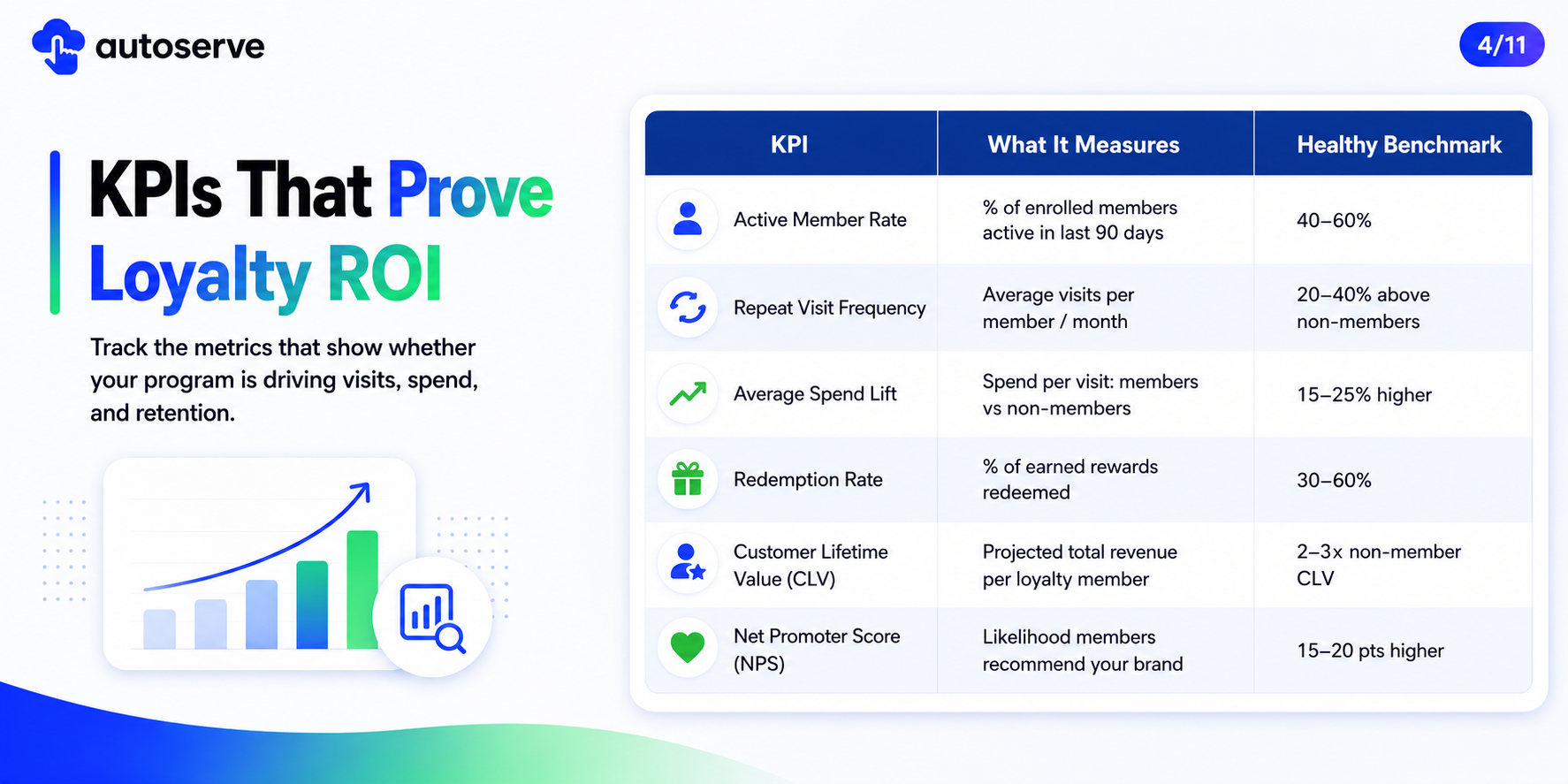
Repeat visit frequency is calculated by dividing total loyalty member visits by the number of active members during a specific period.
Track this monthly by location, not only at the brand level. A branch with declining visit frequency among loyal members may have a service, training, or redemption issue that needs attention.
Average spend lift measures the difference in transaction value between loyalty members and non-members at the same location during the same period.
A healthy program often shows 15% to 25% higher average spend among members. If members are spending the same as non-members, your reward structure may not be creating incremental behavior.
The restaurant groups that win loyalty over the next five years will not win because they found the perfect points formula or built the most feature-rich app.
They will win because they make every guest feel recognized at every location, on every visit, and through every communication.
That is what a loyalty program for multi-location restaurants is really building. It is not just a points system. It is a trust relationship at scale.
Technology enables it. Data informs it. But the human experience is what makes a guest stop seeing your restaurants as options and start seeing them as their place.
Your competitors are opening new branches, running promotions, and chasing new customers. You have the opportunity to build something they cannot easily copy: a customer base that is attached to your brand, resistant to competitor offers, and growing in value every time they walk through your doors.
That is the loyalty advantage. It starts with the decision to build the program properly.
Ready to build a loyalty program your guests actually want to join? Start by auditing your guest data, defining your top three customer segments, and choosing a loyalty model that matches your visit frequency and average transaction value.
The best time to start was last year. The second-best time is today.
Yes. In many ways, a two or three-location group is the ideal size to start. The data footprint is manageable, implementation is easier, and guest experience improvements can be seen quickly.
Start with a simple visit-based or points model before adding more complex features.
At minimum, you need the guest’s name, contact detail, and transaction history linked to a unique customer ID.
Everything else, such as demographics, preferences, and behavior segments, can be added over time.
Starting with a simple data model is better than waiting for a perfect data system.
Most well-structured programs begin showing impact on repeat visit frequency within 60 to 90 days of launch.
Full customer lifetime value and revenue analysis becomes more meaningful at the 6-month mark. The clearest ROI picture usually appears after 12 months.
We try to make easy and simple for every professionals. Get 30 days free trial - No credit card required.

